Actor Infrastructure Platform
The foundation layer of the Actor ecosystem
AIP provides all the Actors, Services, runtime, communication, and security required to deliver distributed, concurrent, and autonomous computing — from edge devices to high-performance computing.
It underlies every PointOfData.ai product, so understanding it is important. The model is simple and clear.
Footprint on a 64-bit machine
- Actor binary
- 786 KB
- Actor memory at startup
- 5 MB
- Neural Memory binary
- 894 KB
- Neural Memory at startup
- 10 MB
Native by design
It runs on a bare operating system
Written in C
Actor and Evolutionary Neural Memory services need no running software beyond the base OS.
No layer cake
No interpreter runtimes, no phalanx of packages, no version dependencies to keep in sync.
POSIX everywhere
AIP supports all modern POSIX-compliant operating systems, from edge devices to HPC.
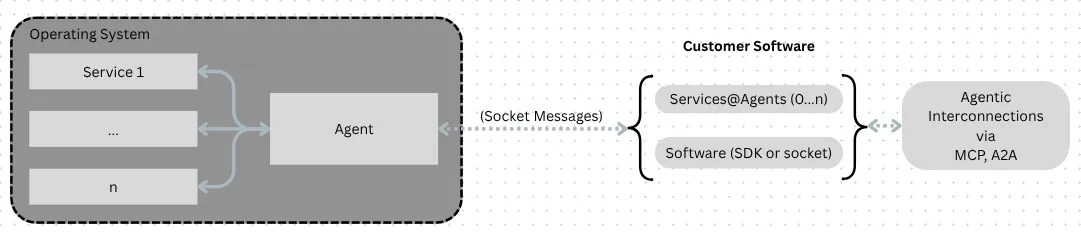
Actors and Gateways
Everything talks over sockets
An Actor Gateway accepts messages, routes them to the correct Actor as necessary, and handles the message returned from the Actor to the requestor. It manages the Actors assigned to it, turning them on and off as required.
Actor Gateways communicate with everyone — other Actors and any other software — using TCP sockets, a high-performance, flexible, well-proven communication protocol.
Messages
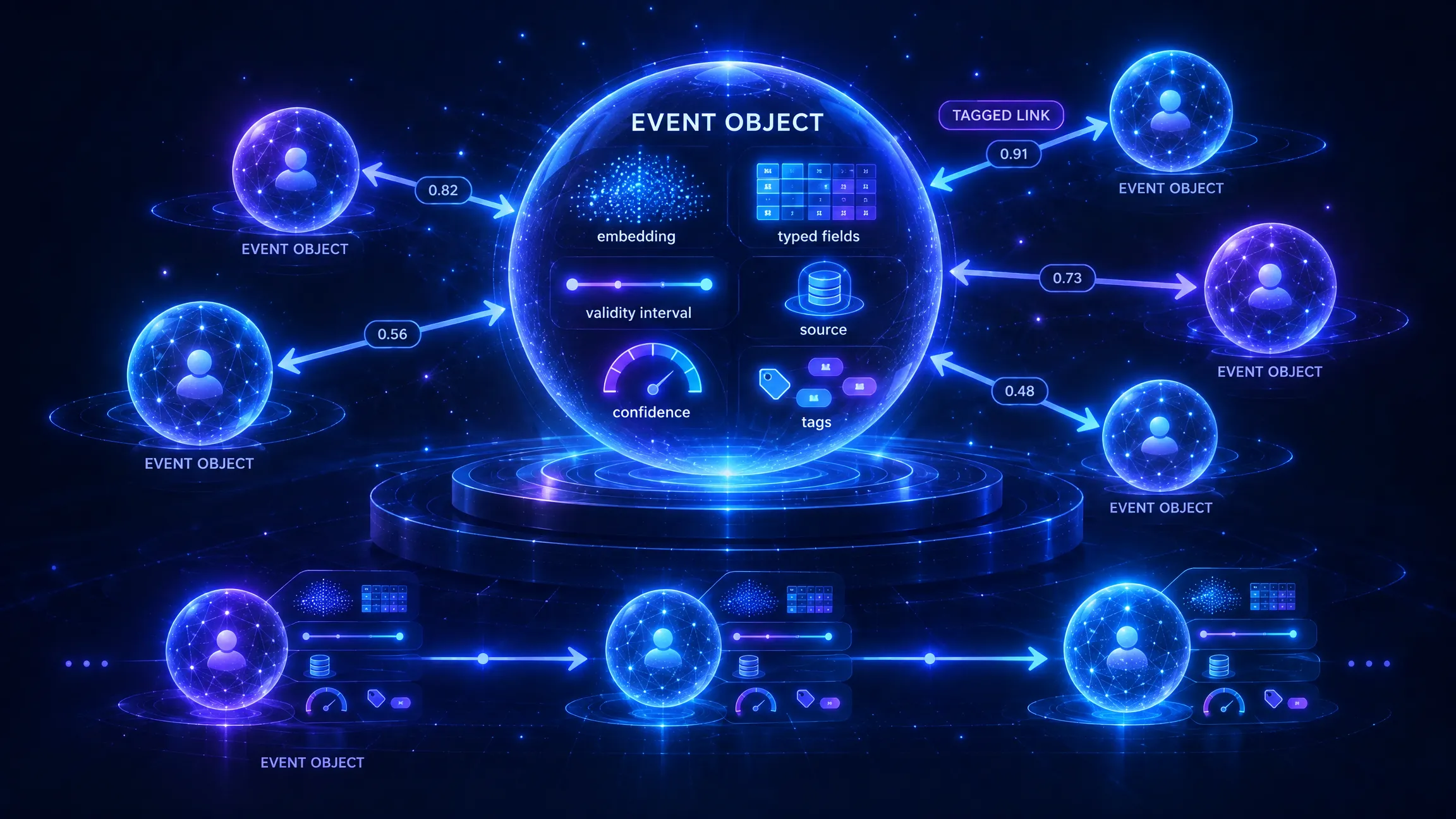
Every message is an Event
An Event is something that happens at a specific time and location, sent from a specific entity to a specific entity. For example, edge software captures telemetry in surgery and sends it to Evolutionary Neural Memory.
Messages are like e-mails, but they carry instructions and data for what to do: store an Event, search Evolutionary Neural Memory, request a service, and infinitely more based on design requirements.
Services
Host any runtime
Services run the software an Actor uses, hosting it in the appropriate runtime. Running Llama-3, for example, uses the llama.cpp kit for a performant solution. This lets an engineer run and support any software in an Actor architecture.
Security
Layers you control
AIP manages security for the creator, giving full control over the layers of security, including SSL.
Evolutionary Neural Memory
The database runs as its own Actor
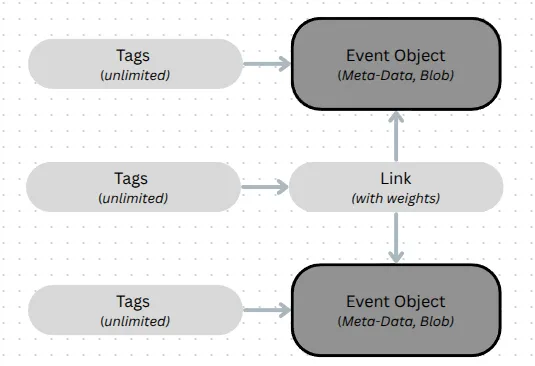
Our native Evolutionary Neural Memory DB service runs as its own Actor type, and its service architecture has unique characteristics that are important to understand.
Searching high-fidelity context requires techniques far beyond simple keyword or vector searches. Evolutionary Neural Memory search is programmable with conditions and branches, pattern matching, and mathematical searches across Events, Tags, and Links.
Open source SDKs
Build on Pod-OS
Public clients for Python, Rust, Go, and Java — plus a CLI for live gateway testing. Assert claims, link them, and query as-of state from your language of choice.
View all developer tools →What this adds up to
A simple architecture that expands infinitely
By design, both AIP's platform software and storage are performant and efficient. That same small footprint scales without change from an embedded sensor to a hypercomputer, providing distributed, concurrent, and autonomous computing.
AIP is the foundation of the Actor ecosystem.
Product documentation
Pod-OS Documentation
Gateways, Actors, Evolutionary Neural Memory, deployment, and how to add and query data.
Open pod-os.com docs →Build on the platform
Free access for builders, and direct conversations for teams evaluating Actor-based infrastructure.