About PointOfData.ai
Infrastructure for the Actor Economy
We are building the layer where millions of Actors — including AI agents — collaborate autonomously to power the next generation of business and products.
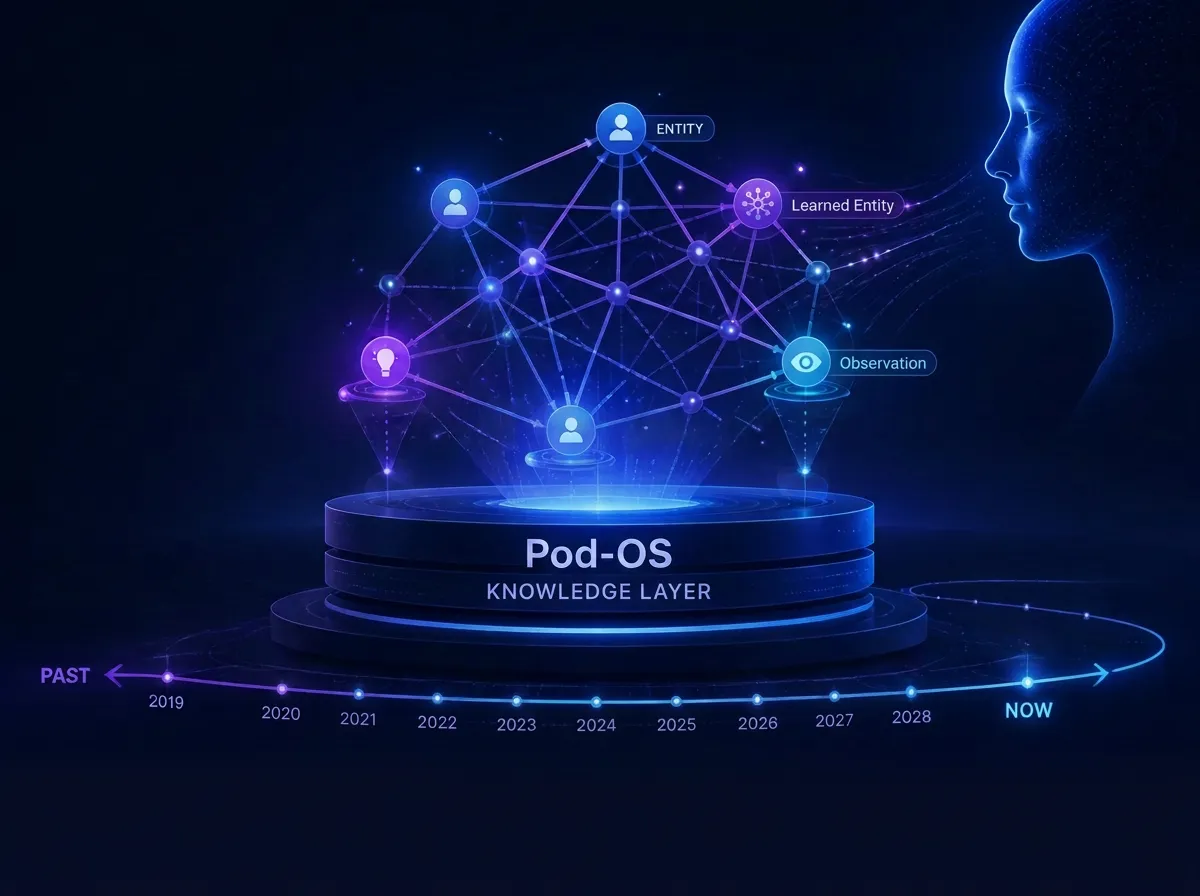
It starts with memory. Fifteen years ago we set out to build a data store that could capture, interrelate, and retrieve the high-fidelity context that AI, robotics, and interactive computing actually require.
Our story
Computing's high-fidelity moment
In 1954 the phrase "high-fidelity" was coined to mark a transition to a more engaging experience — one that brought the nuance and depth of live music into the living room, helping power today's $30 billion music industry.
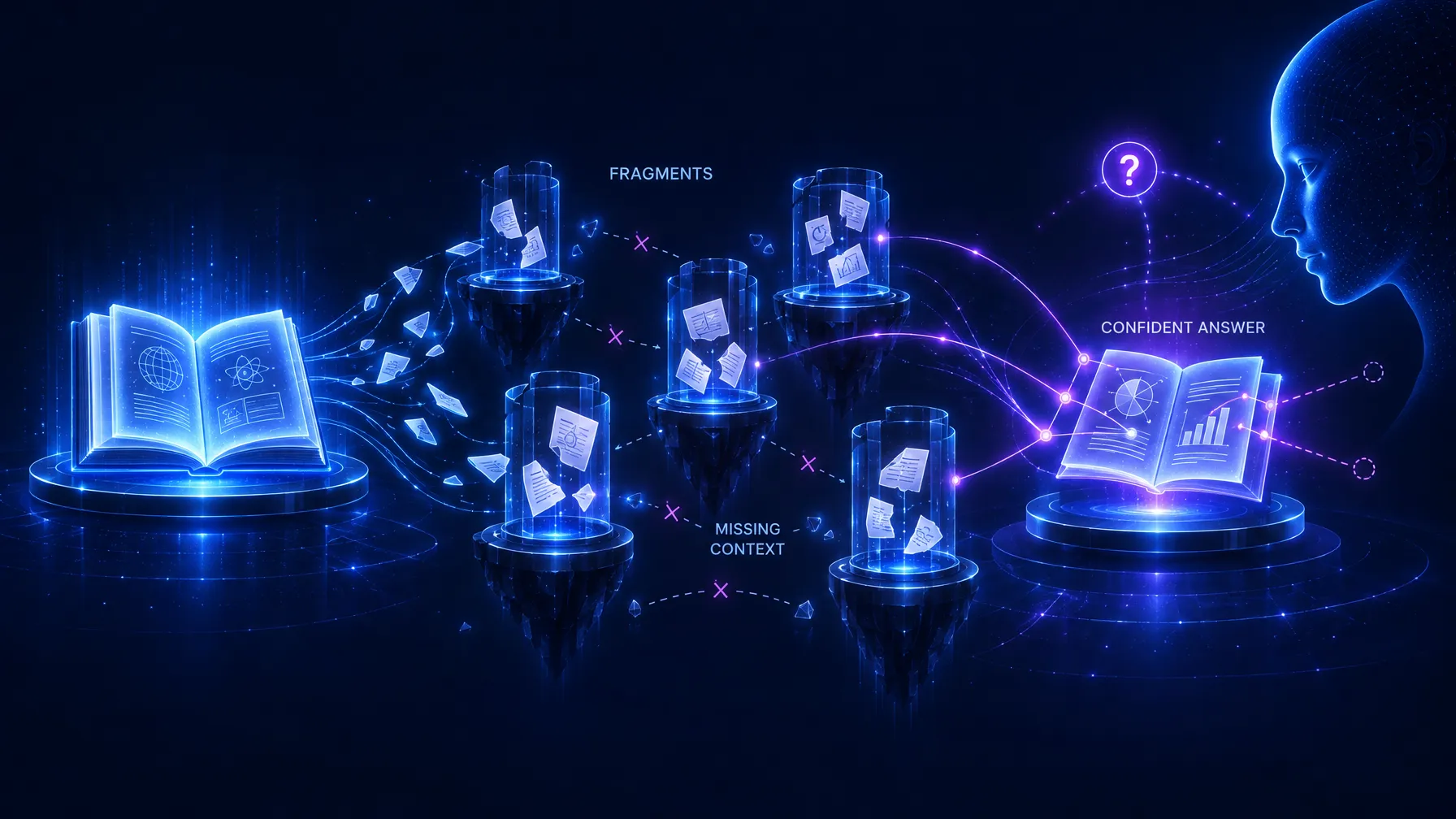
Computing is at a similar inflection point. AI, robotics, and interactive computing require orders-of-magnitude higher fidelity than exists today. Companies that fail to capture the context describing their constantly evolving markets, products, partners, customers, and supply chains will produce substandard products: less capable AI, lower productivity gains, and poorer human-AI collaboration.
Why memory
So we built a Persistent Memory
AI performance is driven by the quality and volume of data it can reach. GPT's breakthrough came in large part because the detail used to describe a single word was an order of magnitude greater than previous efforts — from 1,600 to 12,888 dimensions. At query time, providing the best fine-grained data for reasoning improves performance again. The richer the data, the better the performance.
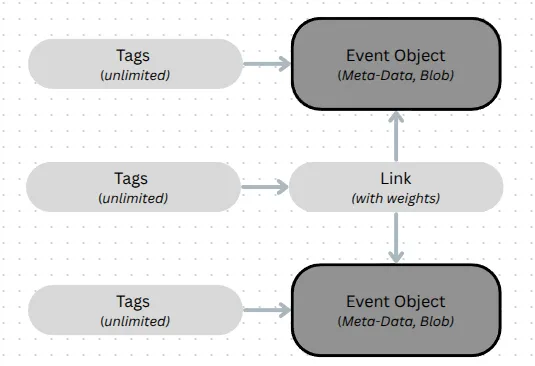
Like memory in humans, our Evolutionary Neural Memory is optimized to capture, interrelate, and retrieve context. Unlike human memory, it is infinitely scalable and flexible — designed from the ground up to serve the detail the next generation requires.
Efficiency by design
Our designs drew inspiration from compression technologies to reduce space requirements and dramatically speed up retrieval. For the same data performance, Evolutionary Neural Memory requires far lower computing resources and dramatically less energy to run.
Architecture
A native Actor ecosystem
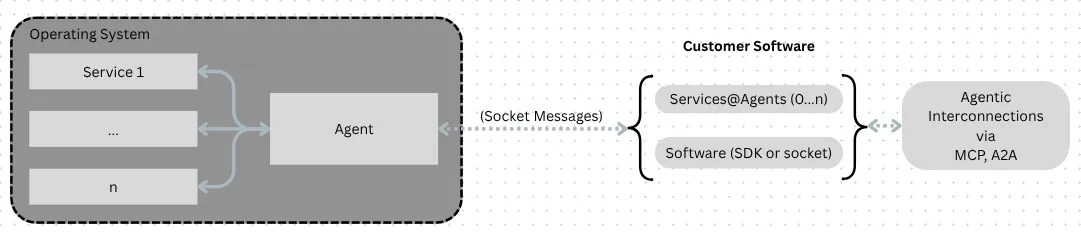
We recognized early that distributed, concurrent, autonomous systems were the most effective architecture. So we designed a native Actor-based ecosystem that communicates using simple messages — essentially, Actors exchanging emails with one another. Native means no layer-cake of technologies: it runs on a bare operating system, from embedded devices to high-performance machines.
In a stunning validation of our design, we discovered we had implemented, at enterprise scale, a style of computation defined by Dr. Carl Hewitt.
In 1973, Carl Hewitt, with Peter Bishop and Richard Steiger, introduced the Actor model of concurrent computation at MIT's AI Laboratory. Inspired by general relativity and quantum mechanics, it treated Actors as the universal primitives of concurrent digital computation — a mathematical framework decades ahead of its time.
Where this goes
The Actor Economy
Implementing an Actor platform offered a crucial opportunity: a new marketplace for data and services. Actors on our platform — Neural Memory included, along with any other running software — can participate in a worldwide marketplace that exchanges data and services.
We are not just making AI, robotics, and computing more capable. We are building the foundation layer for the Actor Economy.
The opportunity
$30T
Projected size of the computing market by 2045. By providing the next-generation data solution, we have a compelling opportunity to become a key platform technology in that growth.
Ready to see what better data can do?
Free access for builders, and direct conversations for investors, partners, and enterprise teams exploring AI infrastructure.